UAE Corporate Tax Law requires accrual basis accounting for most businesses. Under Article 20 of Federal Decree-Law No. 47 of 2022, taxable income must be calculated using financial statements prepared under IFRS (accrual basis) unless a specific exception applies. Cash basis is only permitted for: (1) natural persons with business revenue below AED 1 million, and (2) juridical persons qualifying for Small Business Relief (revenue ≤ AED 3 million) who elect to use cash basis. All other UAE businesses must use accrual accounting.
Cash vs accrual accounting is not just an accounting theory question in the UAE — it has direct implications for your Corporate Tax filing, FTA compliance, and penalty exposure. Many UAE business owners assume they can freely choose their accounting method. They cannot.
Since the UAE Corporate Tax came into force for financial years starting on or after 1 June 2023, the Federal Tax Authority has clear rules about which accounting basis must be used. Getting this wrong affects your taxable income calculation and your entire Corporate Tax return. This guide explains exactly what the FTA requires, who can use cash basis, and what every UAE business needs to know.
What UAE Corporate Tax Law Actually Says About Accounting Basis
Under Article 20 of the UAE Corporate Tax Law (Federal Decree-Law No. 47 of 2022), taxable income is calculated based on the net profit or loss in the financial statements prepared in accordance with International Financial Reporting Standards (IFRS).
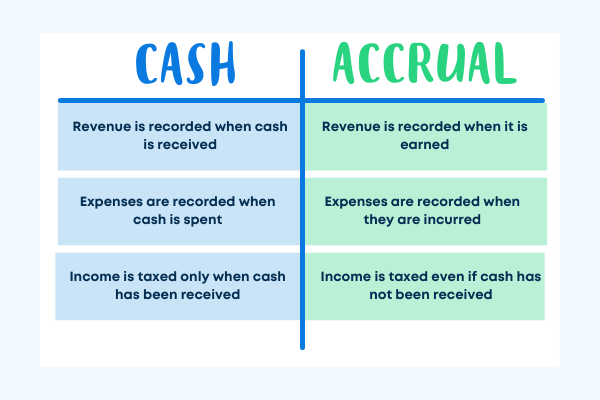
IFRS requires accrual basis accounting — this is not optional for most UAE businesses. Revenue is recognised when earned, and expenses are recognised when incurred, regardless of when cash moves.
| Business Type | Accounting Basis Required | Notes |
|---|---|---|
| Most UAE companies (LLC, PJSC, Free Zone, etc.) | Accrual (IFRS) Required | Default under Article 20; no choice |
| Natural persons — business revenue below AED 1M | Cash Basis Permitted | Ministerial Decision No. 114 of 2023 |
| Small Business Relief (revenue ≤ AED 3M) — elected | Cash Basis if Elected | Must actively elect; not automatic |
| Qualifying Free Zone Person | Accrual (IFRS) Required | Must maintain qualifying income status |
| Banks, insurance companies | Accrual (IFRS) Required | Subject to additional CBUAE requirements |
What is Accrual Basis Accounting?
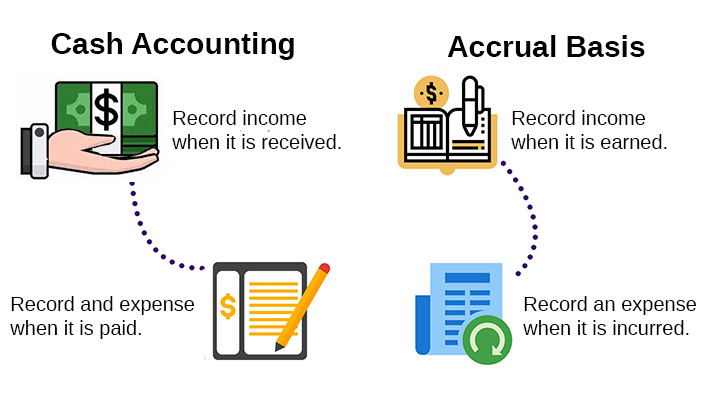
Under the accrual basis, transactions are recorded when they are economically earned or incurred — not when cash changes hands.
- Revenue is recognised when a product is delivered or a service is completed, even if the customer hasn’t paid yet
- Expenses are recognised when goods or services are received, even if the supplier hasn’t been paid yet
- Outstanding amounts appear on the balance sheet as trade receivables or trade payables
UAE Example: A Dubai IT company completes a software implementation project worth AED 80,000 in November 2024 but the client pays in February 2025. Under accrual accounting, the AED 80,000 is recognised as revenue in November 2024 — it appears in the FY2024 tax return regardless of when payment arrives.
What is Cash Basis Accounting?
Under the cash basis, transactions are recorded only when cash is physically received or paid.
- Revenue is recognised only when payment is actually received in the bank
- Expenses are recognised only when cash or a bank transfer goes out
- No accounts receivable or payable appear on the balance sheet
UAE Example: The same IT company using cash basis would record the AED 80,000 only in February 2025 when the client pays — shifting it into the FY2025 tax return instead. This can defer tax but may also mask the true financial position.
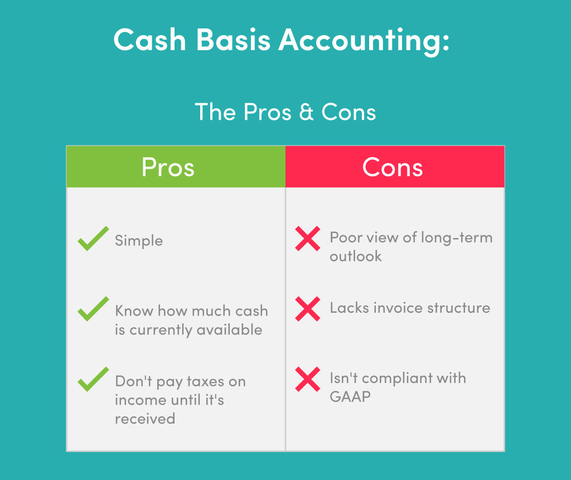
- Simple to maintain
- Easy to understand cash position
- Can defer tax to when cash is received
- Lower bookkeeping complexity
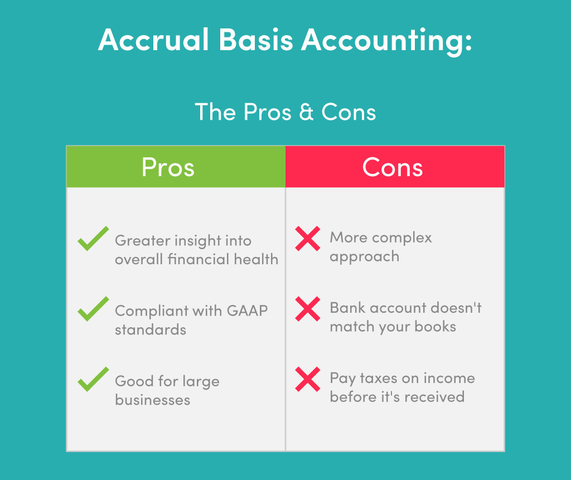
- ❌ Not IFRS-compliant
- ❌ Not permitted for most UAE companies
- ❌ Doesn’t show true profit position
- IFRS-compliant — FTA requirement
- Accurate picture of business performance
- Required for UAE Corporate Tax
- Consistent VAT & CT reporting
- Supports bank financing applications
- Required for external audit
- ❌ More complex bookkeeping
Who Can Use Cash Basis Accounting in the UAE?
The UAE Corporate Tax Law and subsequent Ministerial Decisions create two narrow exceptions where cash basis is permitted:
Exception 1 — Natural Persons with Revenue Below AED 1 Million
Under Ministerial Decision No. 114 of 2023, a natural person (individual/sole trader) whose total business revenue does not exceed AED 1 million in a tax period may use cash basis accounting. This covers freelancers, sole traders, and self-employed individuals operating in the UAE.
Exception 2 — Small Business Relief Election (Revenue ≤ AED 3 Million)
Under Cabinet Decision No. 73 of 2023, UAE businesses (including juridical persons) with revenue not exceeding AED 3 million in a tax period may elect for Small Business Relief — treating their taxable income as zero for that period. Businesses electing Small Business Relief may also use cash basis accounting for that period, but this must be actively elected on the CT return — it is not automatic.
How Accrual Accounting Works in Practice for UAE Companies
For the vast majority of UAE businesses — every LLC, Free Zone company, and branch — here is what accrual accounting requires in practice:
- Sales invoices are posted to revenue when issued (when goods/services are delivered), not when paid
- Purchase invoices are posted as expenses when received, not when the bank transfer goes out
- End-of-month, your accountant runs month-end close entries: accruals, prepayments, depreciation, provisions
- Your general ledger maintains trade receivables (money owed to you) and trade payables (money you owe)
- Monthly financial statements — Balance Sheet and P&L — reflect the economic reality, not just cash movements
- Your balance sheet will show debtors, creditors, accrued income, and deferred income entries
Not Sure Which Accounting Basis Applies to Your UAE Business?
Our ACCA-certified accountants will assess your eligibility, set up your books on the correct basis from day one, and ensure every month-end entry is FTA-compliant. From AED 750/month — all-inclusive.
💬 Chat With a UAE Accounting ExpertTransitioning from Cash to Accrual Accounting in the UAE
If your business has been using cash basis and now needs to switch to accrual — either because you no longer qualify for Small Business Relief or are formalising your accounting — here is the process:
-
1Set a transition date Typically the first day of the first tax period requiring accrual accounting (e.g. 1 January 2024 for a calendar-year business).
-
2Identify all outstanding receivables List every unpaid sales invoice as at the transition date — these become opening trade receivables on the accrual balance sheet.
-
3Identify all outstanding payables List every unpaid supplier invoice as at the transition date — these become opening trade payables and expense accruals.
-
4Identify prepayments and accruals Rent paid in advance, insurance premiums, and annual subscriptions need to be split across the periods they relate to.
-
5Post opening balance sheet entries Your accountant posts journal entries to recognise all the above items on the opening balance sheet in your accounting software.
-
6Adjust first-year Corporate Tax return The transition creates temporary timing differences — income recognised in accrual basis that was previously deferred. Your tax adviser will account for these in the CT return to avoid double-counting.
What Documents Does the FTA Expect for Accrual-Basis Accounting?
Whether or not you are audited, FTA expects every UAE business to maintain records that support its accrual-basis financial statements for a minimum of 7 years. Key records include:
| Record Type | What to Keep | Minimum Period |
|---|---|---|
| Sales invoices | All tax invoices issued, with date, amount, VAT number | 7 years |
| Purchase invoices | All supplier invoices and receipts, linked to payment records | 7 years |
| Bank statements | All company bank accounts, monthly statements | 7 years |
| Monthly financial statements | Balance Sheet, P&L, trial balance — every month | 7 years |
| Bank reconciliation statements | Monthly BRS reconciling bank balance to ledger balance | 7 years |
| Accrual / prepayment schedules | Workings for all year-end accruals and prepayments | 7 years |
| Fixed asset register | All capital assets with cost, depreciation, and net book value | 7 years |
| General ledger | Complete transaction history in your accounting software | 7 years |
Cash vs Accrual: Full Comparison for UAE Businesses
| Factor | Cash Basis | Accrual Basis |
|---|---|---|
| Permitted under UAE CT Law | Limited exceptions only | Standard requirement |
| IFRS compliant | ✗ No | ✓ Yes |
| Revenue recognised when | Cash received | Service/goods delivered |
| Expense recognised when | Cash paid | Goods/service received |
| Shows debtors and creditors | ✗ No | ✓ Yes |
| Matches revenue with related costs | ✗ No | ✓ Yes |
| Useful for bank financing applications | ✗ No | ✓ Yes |
| Complexity of bookkeeping | Low | Medium–High |
| Who qualifies in UAE | Natural persons <AED 1M; SBR electors ≤AED 3M | All other UAE businesses |
Full Accounting & Corporate Tax Compliance — Handled for You
ProTax maintains your books on the correct accrual basis under IFRS as applicable in the UAE, prepares your monthly financial statements, and files your Corporate Tax and VAT returns to the FTA — all handled by a dedicated ACCA-certified accountant.
What’s included:
- Accounting as per IFRS (accrual basis) — day-to-day transactions, payments, receipts, sales & purchases (monthly)
- Monthly Bank Reconciliation Statements (BRS)
- Monthly aging reports — trade receivables and trade payables
- Monthly financial reports — Balance Sheet and Profit & Loss Account
- VAT registration with FTA (if applicable)
- VAT return workings and submission to FTA (if applicable)
- Determination of admissible and inadmissible expenses
- Calculation of taxable profits
- Preparation and submission of Corporate Tax Return to FTA
- Annual external audit of financial statements
- Dedicated accountant & relationship manager
No office visit required. Serving Mainland, Free Zone, and Offshore businesses across all UAE emirates.
💬 Get Started on WhatsApp — AED 750/monthFrequently Asked Questions
Get Your Accounting Basis Right — Before the FTA Asks
ProTax’s ACCA-certified accountants set up and maintain your books on the correct accrual basis, prepare monthly IFRS-compliant financials, and file your Corporate Tax return accurately. No office visit. Dedicated accountant. From AED 750/month.
💬 Free Consultation on WhatsApp